
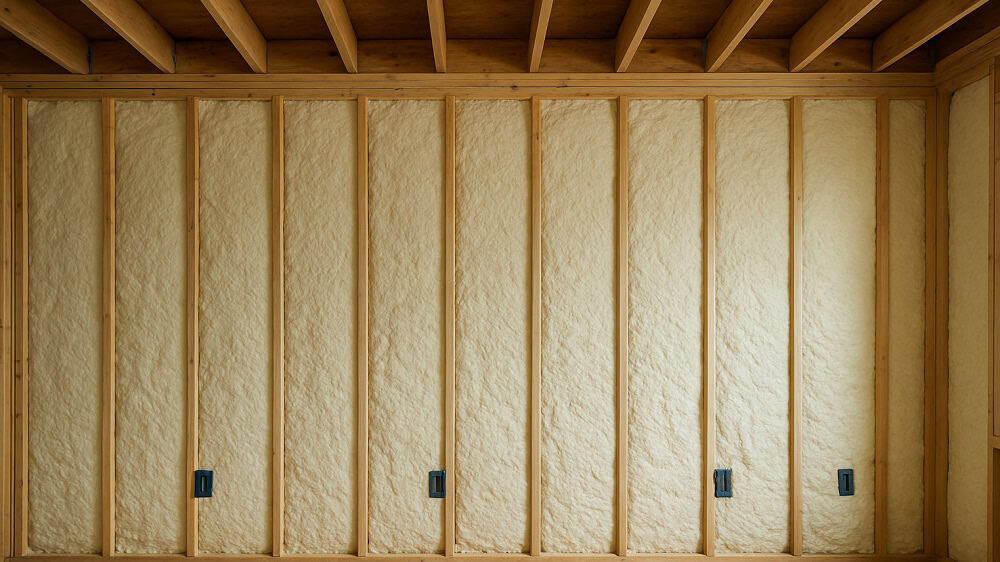

Short Answer: “For Toronto homes, spray foam usually delivers better real-world comfort than fiberglass because it insulates and air-seals in one step. Closed-cell foam offers roughly R-6 to R-7 per inch and adds vapor resistance—excellent for basements, rim joists, and compact rooflines. Open-cell runs ~R-3.5–3.8 per inch and dampens sound in larger cavities. Fiberglass can be the budget leader in simple wall or attic bays, but requires separate air-sealing to control drafts. The smart Toronto choice is often hybrid: foam at leak-prone details (rim joists, attic transitions), plus cost-effective insulation in open areas to meet R-value targets. For a room-by-room plan across East York, Etobicoke, North York, Scarborough, Toronto, and York, book a local assessment.”
If you’re weighing next steps for your Toronto home, explore our spray foam capabilities here: high-performance spray foam.
How They Work (and Why It Matters in Toronto)
Spray foam expands in place, sealing gaps and delivering high R-value per inch. Result: fewer drafts, higher real-world performance, and better control of condensation risk in cold months. Fiberglass slows heat transfer but doesn’t air-seal; its performance drops if it’s compressed, poorly fitted, or exposed to air movement.
Open-Cell vs. Closed-Cell Spray Foam
Open-cell is lighter and great for sound dampening and larger cavities; closed-cell is denser, offers a higher R-value per inch, and adds vapor resistance—ideal for basements, rim joists, and compact rooflines.
Toronto Use-Cases at a Glance
- Attics in North York and Scarborough often benefit most from air sealing + insulation.
- Rim joists in older York and East York homes are leak hot-spots—closed-cell foam shines here.
- For budget-conscious wall retrofits in Toronto proper, fiberglass batts can be viable if paired with diligent air-sealing.

Performance: R-Value, Air Sealing, and Moisture Control
For a full picture of what we do beyond spray foam, see our hub: full insulation services.
R-Value per inch: closed-cell spray foam ≈ R-6 to R-7; open-cell ≈ R-3.5 to R-3.8; typical fiberglass batts ≈ R-3 to R-3.7. In tight spaces (sloped ceilings, rim joists), foam’s higher R-value helps you hit targets with less thickness.
Air sealing: spray foam acts as insulation and air barrier in one application. In Toronto’s windy shoulder seasons, that often translates to fewer drafts and steadier room temps. Fiberglass requires separate air-sealing (caulking, foam gaskets, weather-stripping) to approach similar comfort.
Moisture: closed-cell foam adds vapor resistance, a big plus where warm indoor air can hit cold surfaces (rim joists, basements). Fiberglass needs proper vapor control layers and meticulous installation to avoid cold-side condensation.
Cost & Lifetime Value
Upfront, fiberglass generally costs less per square foot. Spray foam’s installed cost is higher—but consider lifetime value: air sealing + higher R-value can lower heating costs, reduce ice-dam risk in attics, and improve comfort every day. Many Toronto homeowners choose a hybrid: use spray foam where it matters most (rim joists, tricky rooflines) and fiberglass or blown-in cellulose in large open areas.
Considering a mixed approach? Explore blown-in insulation upgrades for large open areas.
- Spray foam wins: rim joists, basements/sill plates, cathedral ceilings, knee walls, complex framing.
- Fiberglass wins: large simple cavities with good access and strict budgets.
Installation Quality = Results
Spray foam must be properly mixed and applied; fiberglass must be properly fitted without gaps or compression. Either material can underperform if installed poorly. That’s why Toronto homeowners look for trained crews, clear prep, and site protection. A quick credibility note: when you work with FOAMIT, you’re choosing a team that focuses on spec-driven installs, clean job sites, and neighborhood-level scheduling across East York, Etobicoke, North York, Scarborough, Toronto, and York.
Choosing for Your Home: Simple Decision Flow
- Is air leakage your main pain? (Drafty rooms, cold floors, uneven temps) → prioritize
spray foam at leak paths (rim joists, attic transitions). - Is lowest upfront cost critical? → use fiberglass in straightforward cavities,
plus targeted air-sealing. - Basement or moisture-prone zones? → lean closed-cell foam for added
vapor resistance.
- Identify draft sources before quoting.
- Define R-value targets by area (attic, walls, basement).
- Decide where foam delivers the biggest comfort gain for the spend.
- Combine materials if it maximizes value.

Quick Answers for Toronto Homeowners: Spray Foam vs. Fiberglass
Is Spray Foam Overkill For A Small East York Semi?
Not if drafts and cold floors are the issue. A targeted rim joist and
attic bypass treatment often delivers big comfort gains.
Will Fiberglass Be Enough For My North York Attic?
If you pair it with proper air-sealing and reach recommended R-values, yes.
For complex rooflines, foam at the transitions can help prevent ice dams.
What About Basements In Scarborough Or Etobicoke?
Closed-cell foam at the sill plate and foundation transitions helps manage
moisture and thermal bridging.
How fast Is The Process In Toronto?
Most projects complete in 1–2 days depending on area size and prep. Scheduling covers Toronto, York, and all nearby neighborhoods.
Next Step
Wherever you live—Toronto, East York, Etobicoke, North York, Scarborough, or York—
FOAMIT will size the right mix for comfort and value:
targeted spray foam at leak points and cost-smart insulation in open areas.
• Flexible GTA Scheduling
• Clean, Tidy Job Sites
• Clear, Written Scope Before Work
Planning spray foam insulation for your home? Book a free local GTA assessment
with FOAMIT.