


Why Moisture Is a Big Deal in Basements
Basements sit below grade—meaning they’re surrounded by soil. And soil holds moisture. Without the right insulation system, that moisture can enter your walls and floors, leading to rot, mildew, and poor indoor air quality.
In areas like Brampton, King City, or Caledon, where seasonal humidity and freeze-thaw cycles are common, moisture control isn’t optional—it’s essential.
What Is a Vapor Barrier, Exactly?
A vapor barrier is a thin, impermeable layer—usually made from polyethylene plastic—designed to prevent moisture from passing through walls, ceilings, or floors. It’s placed on the warm side of the insulation in colder climates to keep warm, moist indoor air from hitting cold concrete or block walls and condensing into water.
But not all insulation systems require a separate vapor barrier. Some types, like spray foam, offer built-in moisture resistance, while others, like fiberglass or mineral wool, usually do n
When Is a Vapor Barrier Recommended?
1. Insulation Type
- Fiberglass batts or loose fill: These materials are air-permeable and require a vapor barrier to prevent trapped moisture.
- Rigid foam board: Varies by type—some are vapor retarders.
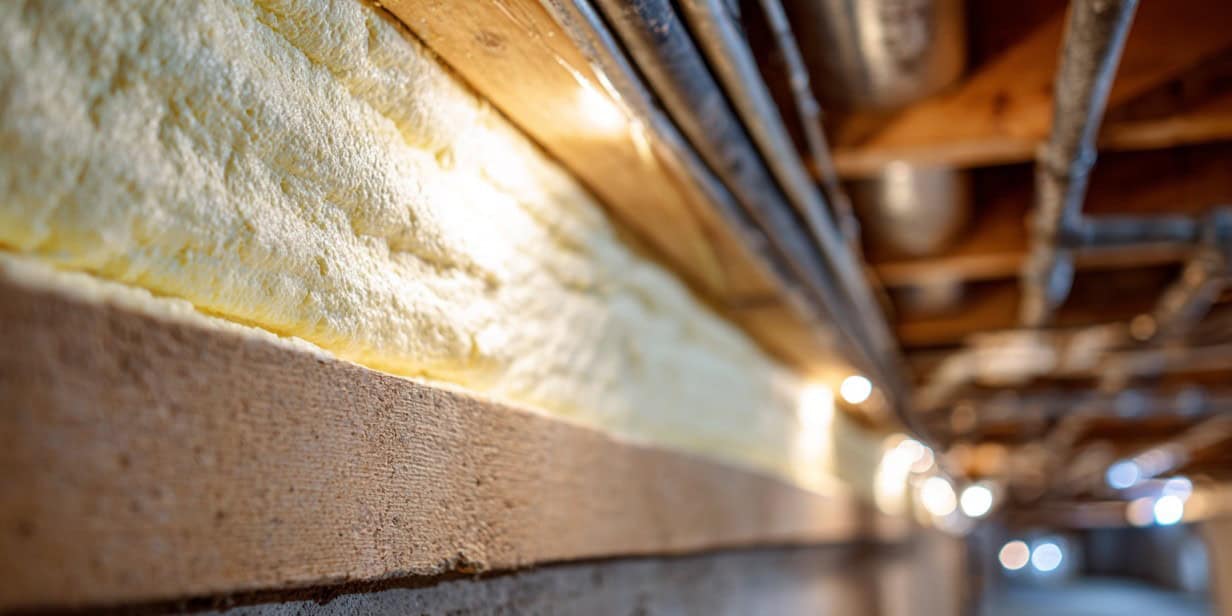
- Spray foam insulation: Closed-cell foam acts as an air and vapor barrier in one, reducing the need for additional layers.
2. Wall Construction and Climate Zone
In colder parts of Ontario, where indoor air is much warmer than basement wall surfaces in winter, a vapor barrier helps prevent condensation.
3. Finished vs. Unfinished Basement
If you’re planning to finish your basement, including drywall and flooring, you should incorporate a vapor barrier to avoid damaging your interior finishes over time.
For guidance on how we assess these conditions, visit our page on below-grade wall insulation solutions.
Common Mistakes to Avoid
Double Vapor Barriers
Using two barriers—one on each side of the insulation—can trap moisture between layers, causing rot. Always allow for controlled drying toward one side.
Wrong Barrier Placement
A vapor barrier should go on the warm side of the insulation (interior side in cold climates). Placing it against cold concrete can do more harm than good.
Poor Sealing or Taping
A vapor barrier is only effective if it’s properly sealed around pipes, joints, and electrical boxes.
Ignoring the Floor
People often focus on walls, but basement floors can wick moisture too. A proper subfloor system or foam board underlayment may be needed.

Should I Choose Spray Foam Instead?
Spray foam insulation is often the best solution for moisture-prone areas like basements. It combines air sealing, thermal resistance, and vapor control in a single product. With closed-cell spray foam, you often don’t need an additional vapor barrier at all.
If your basement walls are uneven, or you’re dealing with signs of dampness or mildew, a spray foam application might be the smarter option. FOAMIT specializes in moisture-resistant insulation upgrades tailored to each home.
Learn more about our approach and experience in the GTA on our company background and values page.
Final Thoughts: Do You Need a Vapor Barrier?
In most Ontario basements, the answer is yes—unless you’re using a closed-cell spray foam system that already handles vapor control. The goal is to build an insulation assembly that resists moisture while allowing for controlled drying.
Not sure what insulation strategy is right for your basement walls or floors? Whether you live in Oakville, Caledon, or anywhere across the Greater Toronto Area, FOAMIT can help you design a safe, energy-efficient, and mold-resistant solution.
Reach out to our Southern Ontario team today for a free consultation or site visit.