
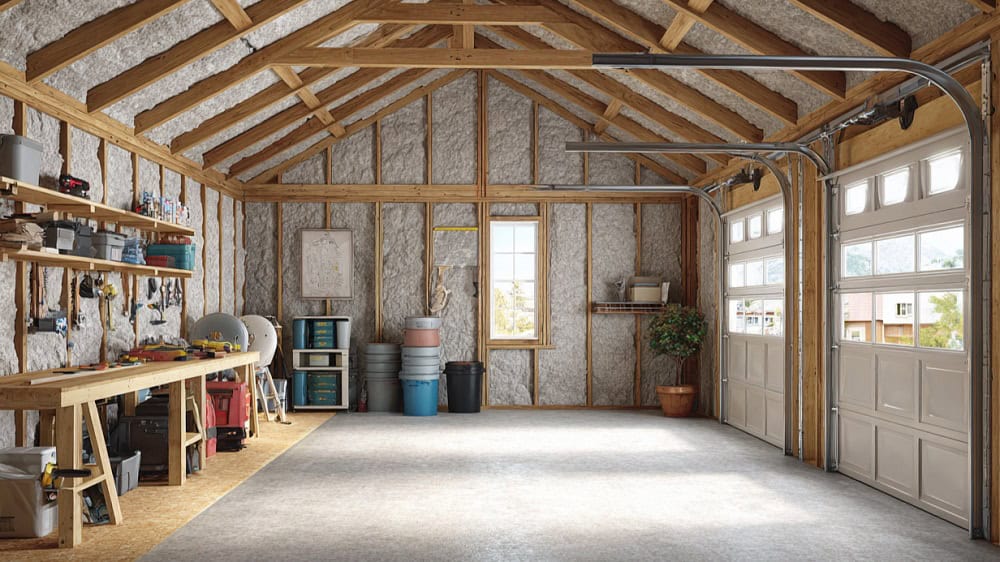

“Yes—garage insulation can reduce noise, but expectations matter. Filling wall and ceiling cavities (especially with open-cell spray foam for absorption and air-sealing) typically delivers a modest drop in airborne sound. The big improvements come when insulation is paired with assembly upgrades—for example, resilient channels and additional drywall to add mass and decouple surfaces. For attached garages or rooms above the garage in Richmond Hill, start with airtight, well-insulated cavities, then add mass/decoupling where quiet really counts (bedrooms, offices, studios).” (Sources: gypsum.org, Journal of Light Construction)
From Bayview Hill and Crosby to Jefferson, Mill Pond, and Oak Ridges, many homeowners ask whether insulation alone is enough. Here’s the clear, local answer. To explore materials, coverage, and project timing for Richmond Hill, see our garage wall and ceiling insulation options and book a no-pressure estimate.
What Kind Of Noise Does Garage Insulation Actually Reduce?
Insulation helps most with airborne noise—think car idling, conversation, and mid-to-high-frequency tool sounds. When we fill a stud bay (or spray open-cell foam), we absorb some sound energy and seal small air paths that would otherwise leak noise into the home.
Realistic Expectations For A Typical Stud Wall
Any properly installed cavity insulation—fiberglass, mineral wool, or spray foam—can bump a wall’s overall sound performance versus an empty cavity. The stud framing and wall design still dominate. Translation: insulation alone is helpful, not miraculous—big jumps require more mass (extra drywall) and decoupling (resilient channel).
Air Sealing Matters As Much As Absorption
Because noise often rides air leaks, foam’s continuous seal can outperform a loosely installed batt in real-world conditions. That’s one reason spray foam is popular when a room sits above the garage—we reduce both drafts and airborne sound travel through ceiling penetrations.
For a complete view of materials and use-cases across your home, browse our insulation services hub.
Open-Cell vs Closed-Cell In A Garage (And When Each Shines)
Open-Cell Spray Foam
Lower density with excellent sound absorption and air sealing; ideal for interior garage walls and ceilings where comfort and noise control are priorities.
Closed-Cell Spray Foam
Higher R-value per inch, moisture control, and added rigidity—great for exterior-facing garage walls where cold exposure and humidity are concerns. It still seals air paths but is not a substitute for added mass when you need strong isolation.
In practice, many Richmond Hill projects blend the two: open-cell for absorption inside, closed-cell where moisture or exterior exposure demands it.

Good / Better / Best Paths For A Quieter Attached Garage
Good — Air-Tight, Absorptive Cavities
Fill all wall and ceiling bays. Prioritize open-cell foam for absorption on interior surfaces; use closed-cell on cold, exterior-facing walls as needed. Seal around outlets, penetrations, and top plates to reduce flanking paths.
Better — Add Mass Where It Counts
Add a second layer of 5/8″ drywall to shared walls/ceilings (garage ↔ living areas). Heavier boards or damping compounds further improve low-frequency performance.
Best — Decouple Strategic Surfaces
Install resilient channels or other decoupling methods on ceilings below bedrooms or offices. Combine with the “Better” step for a stacked benefit: absorption + air seal + mass + decoupling.
For adjacent upgrades that pair perfectly with garages, see our spray foam options.
Local Use-Cases (Richmond Hill Neighbourhood Examples)
Bayview Hill & Oak Ridges — Bedrooms Above The Garage
Homeowners often want early-morning quiet and better temperature stability upstairs. We emphasize air-sealed open-cell in the ceiling, then mass/decoupling if a nursery or principal bedroom is directly above.
Jefferson & Mill Pond — Hobby Spaces And Home Gyms
For workouts and weekend projects, cavity insulation reduces chatter and mid-frequency sound escaping to the street and into adjacent rooms. Where music or tools get loud, the “Better/Best” steps help tame low-frequency rumble.
Crosby — Shared Walls To Living Areas
Where the garage shares a wall with a family room or office, insulation plus a heavier gypsum layer makes conversations and TV bleed-through far less noticeable.
What Insulation Doesn’t Do (And How We Fill The Gap)
Insulation won’t fully stop structure-borne vibration (e.g., heavy impacts). That’s where decoupling systems and added mass shine. If your goal is near-studio quiet, we’ll design a full assembly—insulation for absorption/seal, resilient channels, and double gypsum—targeted at the specific room you’re protecting.
Why Homeowners In Richmond Hill Choose FOAMIT
Local crews experienced with York Region construction details and moisture conditions. Clear, room-by-room guidance so you invest only where quiet truly matters. Clean, efficient installs with results you’ll feel and hear on day one.
For a quick overview of our approach and values, visit FOAMIT.

Project Steps & Timeline (What To Expect)
1) Assessment
We start with a short consultation to identify noise paths, shared surfaces, and priorities (bedrooms/offices).
2) Install
We protect finishes, spray or dense-fill the selected cavities, and seal penetrations. Most single-garage projects wrap in a day; larger garages in 1–2 days.
3) Optional Upgrades
Need more quiet? We can add mass and decouple targeted surfaces during the same visit or a follow-up.
FAQs — Noise, Materials & Local Conditions
How Much Noise Can Garage Insulation Actually Reduce?
- Everyday airborne noise: noticeably lower with properly filled, air-sealed cavities.
- Low-frequency or impact noise: pair insulation with mass + decoupling for best results.
Open-Cell vs Closed-Cell: Which Is Quieter In A Garage?
- Open-cell usually absorbs more mid/high frequencies and seals air leaks well.
- Closed-cell adds rigidity, moisture control, and R-value where exposure demands it; use mass/decoupling for big isolation gains.
Will Insulating The Garage Ceiling Help A Bedroom Above?
- Yes—start with air-sealed insulation in the ceiling; add resilient channels and a second gypsum layer if you need further reduction (common in Bayview Hill, Jefferson, and Oak Ridges homes).
Do I Need A Vapor Strategy With Spray Foam In Richmond Hill?
- Closed-cell foam provides a built-in vapor barrier for cold-facing walls; open-cell is typically used on interior surfaces with moisture handled by location-appropriate detailing.
Ready to Plan Your Quieter Garage?
If you live in Richmond Hill—or nearby areas like Mill Pond, Crosby, Jefferson, Bayview Hill, or Oak Ridges—our team can create a customized insulation plan that cuts noise and improves comfort without stretching your budget. Start today by reaching out to our Richmond Hill contact team.