
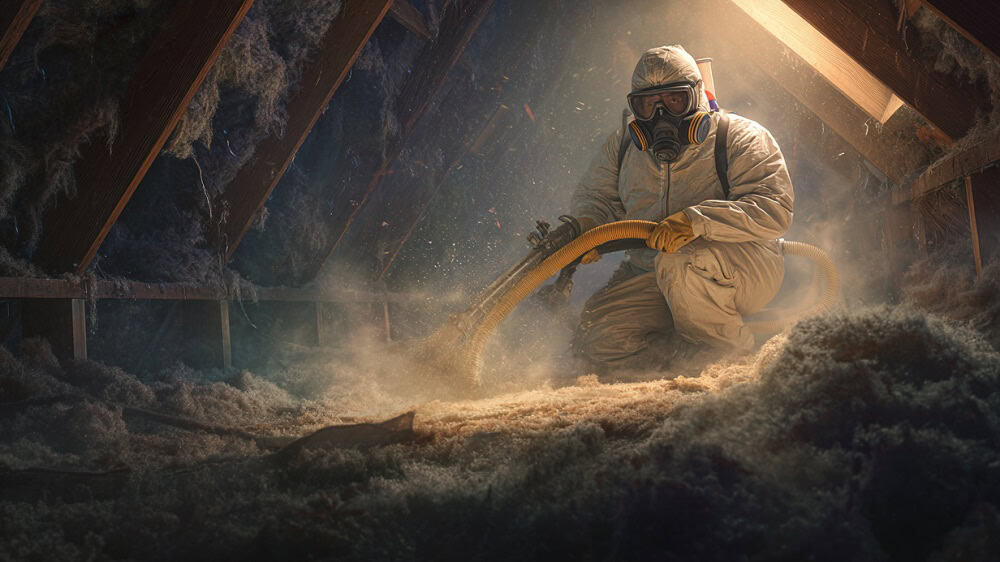

Old insulation becomes a health risk when it’s asbestos-contaminated vermiculite, legacy urea-formaldehyde foam (UFFI), wet/moldy, or pest-contaminated. Don’t disturb suspect material—fine dust and fibres can become airborne. The safest option is sealed containment, negative air, and HEPA extraction by trained pros serving Maple, Thornhill, Woodbridge, and Kleinburg.
What To Watch For
- Vermiculite (possible asbestos): Assume it contains asbestos; do not disturb.
- UFFI / formaldehyde: Can irritate eyes/airways; consider assessment in older walls.
- Fiberglass/mineral wool: Not like asbestos, but fibres/dust can irritate skin, eyes, and lungs.
- Wet or musty insulation: Lost R-value; can harbour mold and odours even after drying.
- Rodent/bat evidence: Urine, droppings, or guano are biohazards—avoid DIY cleanup.
Remove Now If
- It’s wet, moldy, or strongly odorous after leaks or ice dams.
- There’s pest contamination (urine, droppings, guano) or chronic dust entering living areas.
- Renovation work will disturb suspect vermiculite or legacy foams.
What Pros Do (Health-First)
- Identify materials/risks; set sealed containment and negative air.
- Use closed-loop HEPA removal (no open “bag-and-drag”).
- Disinfect where pests or mold were present; air seal bypasses.
- Re-insulate to current standards for clean, efficient performance.
For a health-first plan in Vaughan, trust FOAMIT to assess, contain, and safely remove old insulation—then re-insulate for comfort and air quality.
Start by understanding your material and its condition—then decide if removal is the safest path. For a pro assessment and sealed-system extraction, see safe insulation extraction.
Why Old Insulation Can Be A Health Risk In Vaughan Homes
Decades of renovations, roof leaks, temperature swings, and pest activity can turn insulating materials into dusty, damp, or contaminated layers that spread irritants and allergens every time your HVAC runs. In older homes across Vaughan’s neighbourhoods, attic and wall cavities may also hide legacy materials (like vermiculite with possible asbestos or UFFI) that should be left undisturbed until a professional plan is in place.
What Makes Old Insulation Hazardous?
Before you think DIY, review the common risk profiles below and consider a professional inspection—especially if you see signs of moisture or pests.
Explore related solutions and upgrade paths on our insulation services overview.
Asbestos-Containing Vermiculite (Legacy Risk)
Vermiculite from historical sources can be contaminated with asbestos fibres. The hazard isn’t the look of the granules—it’s the airborne fibres when disturbed. Drilling, bagging, sweeping, or even walking through can release microscopic fibres that must be controlled with negative air, sealed containment, and HEPA extraction. Homeowners shouldn’t disturb suspected vermiculite.
Urea-Formaldehyde Foam Insulation (UFFI)
Some older homes used UF foam in walls. Even decades later, formaldehyde off-gassing may persist at low levels, especially in poorly ventilated areas. If you notice eye, nose, or throat irritation near older wall cavities or during renovations, testing and targeted removal may be appropriate.
Fiberglass & Mineral Wool (Dust/Irritant Risk)
These common materials aren’t “toxic” the way asbestos is, but fibres and binder dust can irritate skin, eyes, and airways when disturbed. Old batts that have been walked on or cut shed more. In attics with improper air sealing, that dust can be pulled into living areas.
Cellulose & Any Material That’s Been Wet (Moisture/Mold Risk)
Wet insulation loses R-value and can support mold growth if the moisture source persists. Even when dry, residual spores and odour can remain. If you’ve had roof leaks or ice dams in Thornhill or Woodbridge, get the insulation evaluated—targeted removal plus air sealing and re-insulation is often the healthier, more comfortable fix.
Pest Contamination (Rodents Or Bats)
Rodent urine/droppings and bat guano are biohazards. Disturbing contaminated insulation without controls can aerosolize pathogens and allergens. Proper cleanup requires PPE, disinfectant protocols, and sealed removal methods—not a shop vac.
How To Tell What You Have (Without Disturbing It)
Visual Clues Checklist
- Look—don’t touch. Photograph attic layers from the hatch with a light.
- Note granules (vermiculite), loose-fill (cellulose/fiberglass), or batts (fiberglass/mineral wool).
- Check for water staining, matted areas, or signs of pests.
- If you suspect legacy materials or contamination, pause DIY and schedule a professional inspection.
Quick Safety Checklist Before Disturbing Insulation
- Do not sweep, bag, or vacuum suspect materials.
- Avoid cutting new openings through old wall/attic cavities.
- Seal the attic hatch; limit entry until assessed.
- If odours or irritation occur near wall/attic work, stop and ventilate.
- Use professionals for testing, containment, and removal.

What Professional Removal Looks Like (And Why It’s Safer)
A health-first removal plan in a Vaughan home typically includes source identification (visual survey, targeted sampling if needed), containment (poly barriers, negative air machines), HEPA removal (closed-loop vacuums), disinfecting where pests were present, air sealing to stop dust migration, and re-insulation to current performance standards.
Health-First Removal Steps (Checklist)
- Source identification and risk assessment.
- Sealed containment and negative air setup.
- Closed-loop HEPA extraction (no open-air “bag and drag”).
- Targeted disinfecting where pests/mold were present.
- Air sealing of penetrations and bypasses.
- Clean re-insulation to restore performance.

Case Example (Kleinburg)
A 1970s home with mixed vermiculite and matted fiberglass after past roof leaks. The safest plan was sealed HEPA extraction, attic air sealing at penetrations, and a full attic insulation upgrade. Post-project, the family reported less dust and steadier indoor temperatures.
Why Choose FOAMIT
Our team uses sealed containment, HEPA negative air, and a health-first workflow designed for older Vaughan homes. Learn more about our team and standards on FOAMIT official site.
Local FAQs: Vaughan, Maple, Thornhill, Woodbridge, Kleinburg
Is It Safe To Vacuum Out Old Attic Insulation Yourself In Vaughan?
For suspected vermiculite, pest-contaminated, or moldy insulation—no. Household vacuums and contractor shop vacs can aerosolize fibres and bio-particles. Professional crews use sealed-system HEPA extraction with containment and negative pressure to protect indoor air.
Does Vermiculite In Maple, Thornhill, Woodbridge, Or Kleinburg Mean Asbestos For Sure?
Not always—but you can’t tell by sight. Many homeowners choose precautionary handling: treat it as potentially asbestos-containing until professionally assessed. The safest plan is don’t disturb and schedule an inspection.
When Should I Remove, Not Just Top-Up, After A Roof Leak?
If insulation has been wet, shows mold, odour, or pest activity, topping up just buries the problem. Removal, air sealing, and a clean re-insulation deliver healthier air and sustained efficiency.
Will New Insulation Reduce Dust And Allergy Flare-Ups?
Yes—when paired with air sealing, closing the pathway between dusty cavities and living spaces. Homeowners in Woodbridge often report less dust and more stable temperatures after a removal + upgrade.
The Health-First Next Step
If your Vaughan home—in neighborhoods like Maple, Thornhill, Woodbridge, or Kleinburg—has aged, damp, or questionable insulation, it’s best to have a professional inspect it and, if needed, remove it using sealed HEPA methods for safe air quality. To review options tailored to your property, connect with our Vaughan team.